In today’s fast-moving business landscape, launching a new product or entering a market without rigorous risk analysis is a recipe for avoidable failure. Successful startups like Suprmind, Smol Saas, and DevHub have demonstrated a recurring leadership practice: deliberately putting their business plans under intense scrutiny to expose hidden flaws before investing heavily.
This technique, often called red teaming, means assembling an internal or external “adversary” team whose job is to challenge assumptions, identify risks, and inject skepticism into the decision process. However, modern pressure testing goes beyond manual reviews. The emergence of advanced AI, such as GPT and Claude, enables multi-model orchestration — combining multiple AI systems to simulate an adversarial critique at scale. This blog post dives into how you can leverage red team modes powered by multiple AI models to perform robust, high-stakes professional decision support for your business plan.
What Is Red Teaming and Why It Matters for Business Plans
Originating from military and cybersecurity contexts, red teaming is the practice of adopting an adversarial stance to identify vulnerabilities in strategies, systems, or plans. For business plans, especially in startups and ventures, red teaming means:
- Challenging core assumptions: Are market size, growth forecasts, or customer acquisition costs realistic? Exposing risks and failure modes: What could derail revenue projections or product-market fit? Validating competitive analyses: Have all competitors, alternatives, and substitution threats been adequately considered? Stress-testing operational and financial scenarios: What happens if key hires or partnerships fall through?
Incorporating red team critiques forces leadership to confront uncomfortable truths early. This rigor translates into more informed investment decisions, better contingency planning, and ultimately higher odds of success.
The Power of Multi-Model Orchestration in One Conversation
Traditionally, red team exercises rely on internal experts or consulting partners. Yet human bandwidth, biases, and expertise gaps can limit coverage. Emerging AI tools like GPT and Claude have expanded the possibilities for scalable, iterative, and multi-perspective critique. Instead of a single AI “oracle” delivering a verdict, multi-model orchestration means engaging multiple AI engines in one coordinated conversation — each bringing its unique training data, Check out this site reasoning style, and failure modes to the table.
This approach enables a form of built-in skepticism: the models can identify points of disagreement, challenge each other’s outputs, and refine conclusions by cross-examination. Such disagreement is not a bug but a feature that drives accuracy through diversity.
How Multi-Model Orchestration Works in Practice
Input your business plan or executive summary: Upload or paste your plan with key assumptions, market data, financial projections, and strategy statements. Run parallel analyses: Initiate queries to both GPT and Claude to independently evaluate risk factors, competitive landscape, and go-to-market feasibility. Compare and contrast: Trigger a “conversation” where models comment on each other’s outputs, highlighting contradictions or missing context. Iterate and refine: Request clarifications, ask for alternative scenarios, and deepen analyses on flagged points of disagreement. Consolidate findings: Generate a comprehensive red team report that synthesizes consensus risks, debated issues, and uncovered blind spots.This process mirrors the internal vendor evaluations familiar to firms like those served by DevHub and strategy teams known for rigorous partner scrutiny. It democratizes red teaming by leveraging AI’s relentless memory and speed combined with cross-model checks.
Why Disagreement Between Models Is Crucial for Accuracy
One of the most common pitfalls in AI-assisted risk analysis is treating any single model’s output as absolute truth — the “model worship” fallacy. Even cutting-edge LLMs have known hallucination failure modes where they fabricate plausible but false details, miss nuanced context, or overgeneralize.
By orchestrating multiple models with deliberately positioned points of disagreement, you mimic a panel of expert analysts with different perspectives. For example, GPT may excel at narrative logic and market sizing, while Claude might be stronger on legal and regulatory risk. Where their outputs diverge, it signals an opportunity for deeper review rather than blind acceptance.
For companies like Smol Saas in fast-evolving Click for source niches, this ability to triangulate outputs improves the fidelity of risk identification and sharpens mitigation strategies. Over time, leaders can evolve the prompts and workflows to target persistent failure modes spotted during earlier runs.
Example: Disagreement in Customer Acquisition Cost Projections
Aspect GPT Output Claude Output Red Team Interpretation Customer Acquisition Cost (CAC) “Projected CAC of $50 based on industry average benchmarks.” “The plan underestimates CAC. Regional advertising price hikes and limited funnels suggest $70-$90 CAC.” Flagged as a risk. Action: validate marketing channels and revisit CAC modeling assumptions.Detecting and Correcting Hallucinations in Business Plans
Hallucination detection is vital when AI-generated insights feed into critical business decisions. Hallucinations can subtly inflate market sizes, misstate legal requirements, or invent competitor weaknesses.
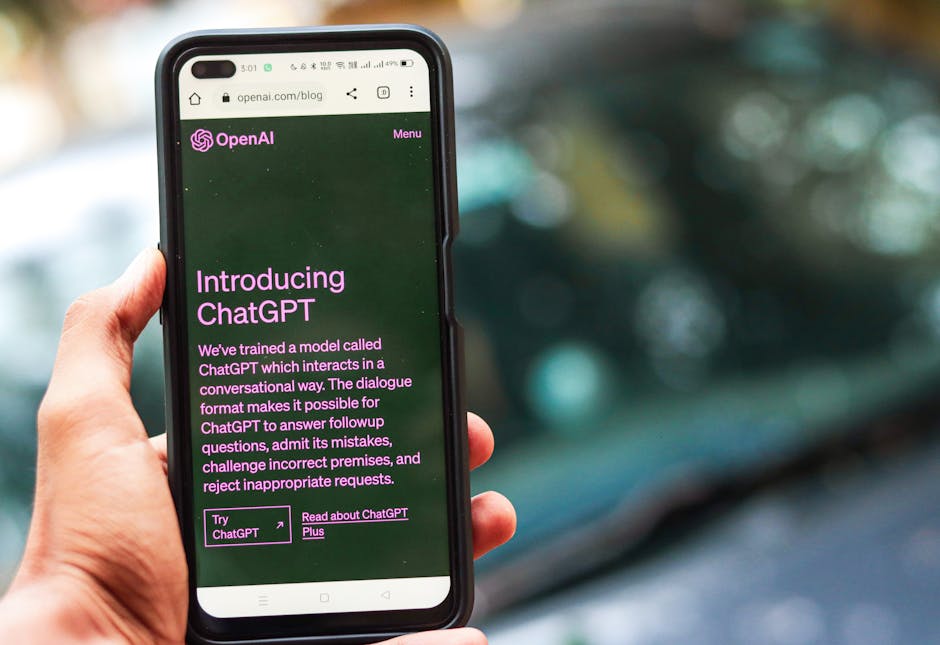
- Step 1: Cross-Model Validation — Check if facts cited by GPT appear in Claude’s outputs or vice versa. Step 2: Prompt Fact-Checking — Request both models to provide source citations or highlight confidence intervals. Step 3: Human-in-the-Loop Review — Have subject-matter experts review contradictory claims flagged by the AI red team. Step 4: Iterative Correction — Refine the AI prompts or adjust plan sections accordingly to avoid repeated hallucinations.
Enterprises working with consulting partners like DevHub often embed this cycle into their decision memos where analytic claims must survive partner scrutiny. The increasing sophistication of tools like GPT and Claude, when orchestrated, can accelerate and scale these internal quality gates.
Applying Red Team Mode to Your Business Plan: Step-By-Step Guide
Prepare Your Business Plan- Isolate sections for targeted critique (e.g., financials, market entry strategy).
- Use platforms that can run GPT and Claude side by side (e.g., toolkits offered by Suprmind or integrated SaaS like Smol Saas). Define prompts to extract risk-related insights from each model independently.
- Initiate iterative questioning — ask GPT and Claude to assess risk factors and then to comment on each other’s findings. Focus on points of disagreement or uncertainty as areas requiring deeper validation.
- Compile a risk register highlighting consensus and contested assumptions. Develop mitigation recommendations for high-risk or uncertain areas. Revisit and refine your business plan before final approval.
Why High-Stakes Professionals Should Embrace AI-Powered Red Teaming
Leadership teams and strategy analysts making decisions with million-dollar or billion-dollar implications can no longer afford static reviews or overreliance on a single source of truth. AI-enabled red teaming, particularly through multi-model critiques, offers:
- Scalable, continuous risk analysis: Run your plan through red team mode anytime, instantly. Reduced bias and blind spots: Diversity of model views counters groupthink. Faster iteration and more resilient plans: Fix weaknesses earlier rather than after costly execution starts. Audit trails and traceability: Document every red team comment to survive partner, board, or investor scrutiny.
Companies like Suprmind, Smol Saas, and DevHub are early adopters backing their go/no-go decisions with this level of rigor, illustrating why AI-enhanced red teaming will be a core business competency in coming years.
Conclusion
Red team business plans using multi-model orchestration are transforming how risk analysis and decision support operate in fast-paced markets. By harnessing disagreement as a feature, not a flaw, and actively detecting hallucinations with state-of-the-art AI like GPT and Claude, businesses can pressure-test assumptions with unprecedented depth and scale.
Whether you are a startup founder, product strategist, or legal ops professional, introducing AI-powered red teaming into your business plan validation workflow can uncover hidden vulnerabilities, improve decision confidence, and ultimately increase the chances your vision survives partner scrutiny and market reality.

Get started today by experimenting with multi-model critiques in your next planning cycle — your future self (and your investors) will thank you.
```