I’ve spent the last decade crawling through server rooms in dusty manufacturing plants, trying to bridge the gap between a 30-year-old Siemens PLC and a modern SAP S/4HANA instance. If you’re a CTO or a Head of Digital Transformation in a global manufacturing firm, you’re likely staring at a familiar mess: your MES data is siloed, your ERP is a monolithic beast, and your "Industry 4.0" initiative is drowning in disconnected CSV exports.
When the RFP goes out, the board wants names they recognize. They want "stability." They want the "safer pick." Usually, that points directly to NTT DATA. But in the world of modern data engineering, "safe" can often be a synonym for "slow and expensive." Let’s break down whether the global giant is truly the move, or if boutique shops like STX Next and Addepto are actually the ones building the architectures that actually ship.
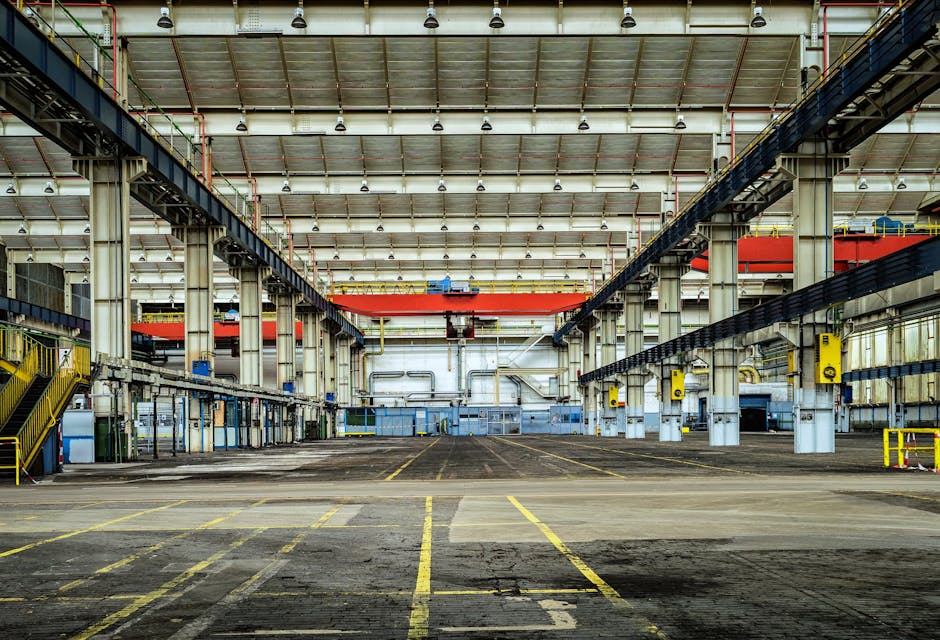
The Architecture Crisis: Why Your Legacy Systems Are Starving
Most global manufacturers are stuck in a loop of batch processing. Your plant-floor data (IoT/PLC) lives in isolation, while your ERP (SAP/Oracle) sits in a separate domain. You’re trying to run advanced analytics on data that is 24 hours old. That’s not a data platform; that’s a post-mortem report.
If your vendor starts talking about "digital transformation" without mentioning the physical-to-digital bridge, show them the door. We need to talk about legacy modernization through a robust streaming architecture. Are we using Kafka to buffer IoT telemetry? How are we handling schema drift when the MES changes a tag name? If the answer is "we use standard ETL connectors," you are already behind.

The "Safe" Vendor vs. The "Ship" Vendor
When you hire a global delivery powerhouse like NTT DATA, you are paying for the safety of a massive headcount and the comfort of a recognizable logo. They have the vertical integration to handle your global SAP/Oracle integration across three continents. However, I’ve seen enough NTT projects bogged down by internal bureaucracy to know that the "safer" choice can turn into dailyemerald.com a multi-year slog.
Compare this to smaller, specialized firms like STX Next and Addepto. These shops don't have the massive overhead of a legacy consultancy. Instead, they act more like a high-octane engineering extension of your team. They are the ones actually writing the Terraform scripts, configuring the Airflow DAGs, and tuning the dbt models.
Comparison Table: Who Delivers What?
Vendor Type Key Strength Architecture Focus Risk Profile NTT DATA Global Governance & Scale Legacy SAP/Oracle Heavy "Safe," but potentially rigid STX Next Agile Python/Cloud Engineering Cloud-native, Stream-focused High delivery velocity Addepto AI/ML & Data Infrastructure Modern Lakehouse (Databricks/Snowflake) Deep technical specializationThe "Week 2" Test: How Fast Can We Start?
Here is my litmus test for any vendor: How fast can you start, and what do I get in week 2?
If you tell me you need three months for "requirements gathering and stakeholder workshops," we are not working together. In week two, I expect a functional prototype. I want to see a pipeline moving data from a gateway into a landing zone. I want to see a dashboard that updates in near real-time, not a slide deck about "strategic alignment."
Whether you choose AWS or Azure as your cloud backbone, your vendor should be able to spin up an environment, connect an edge device, and stream telemetry into a Databricks or Snowflake environment by the end of the second week. That is the proof of concept that matters.
The Infrastructure Stack: Where the Rubber Meets the Road
I don't care about your marketing slides. I care about your stack. To solve the IT/OT integration problem, your platform needs these components:
- Streaming Layer: Use Kafka or Azure Event Hubs. Do not tell me you are moving raw MQTT data into a SQL database and hoping for the best. Orchestration: If it isn’t Airflow or Prefect, don’t bother. You need visibility into why that morning production batch failed to land in the lakehouse. Data Transformation: Use dbt. It’s the industry standard for a reason. If your vendor wants to build custom stored procedures in a proprietary SQL tool, run away. Storage: Whether it's the Azure Fabric ecosystem or an AWS/Databricks lakehouse, it must support Delta Lake or Iceberg tables. ACID transactions on your plant floor data are non-negotiable.
Proof Points That Actually Matter
I keep a running list of "Proof Points" that vendors need to satisfy to win my respect. If they can’t show me these numbers, they haven’t actually built a production system at scale:
Ingestion Volume: "We process 50 million records per day from 200+ PLCs across 5 global sites." Downtime Mitigation: "By integrating real-time vibration analytics, we reduced unexpected machine downtime by 14% in Q1." Latency: "Data latency from sensor to dashboard is under 2 seconds." Data Quality: "Automated data observability caught 99% of schema changes before they hit the production warehouse."The Verdict: Is NTT DATA The Only Way?
The "safety" of a global giant is often an illusion. In my experience, the projects that succeed are the ones where the architecture is lean, the feedback loops are tight, and the vendor is obsessed with the stack, not the contract.
NTT DATA is undeniably powerful if you need a partner to navigate the political landscape of a massive enterprise deployment. They are a "safe" choice for the C-Suite. But if you want to actually win the Industry 4.0 race—if you want real-time observability, automated pipelines, and a platform that actually adapts to your manufacturing floor—you need the technical edge brought by firms like STX Next and Addepto.
Don't fall for the vague promises of "digital transformation." Ask for the stack. Ask for the latency benchmarks. And most importantly, ask: "What do I have in my hands by week two?" If they can't answer that, the "safer" choice is actually the riskiest one you could make.
Looking for a partner to actually ship your manufacturing data platform? Let's stop the consulting-speak and start building. Reach out if you want to talk about how we move from batch headaches to streaming success.