You wake up, pull back the curtains, and see the frost clinging to the windscreen. You unplug your EV, slide into the driver’s seat, and glance at the range indicator. Last night, the car promised 220 miles. This morning, it’s whispering 180. Panic sets in. Is the battery dying? Have you been scammed by the brochure stats?
Let me stop you right there: it’s perfectly normal. But "normal" doesn’t make it any less annoying when you’ve got a motorway slog ahead of you. After eight years of dissecting tech and four years of daily driving an EV in the UK, I’ve learned that the "temperature effect on EV range" isn't a failure—it’s just physics.
The cold reality: Why your battery slows down
Batteries are chemical beasts. They rely on electrochemical reactions to move ions from the anode to the cathode. When it’s cold, these reactions don't happen as snappily. Think of it like trying to run a marathon in a winter coat; your body is working just as hard, but your performance takes a hit.
Furthermore, your car isn't just using electricity to turn the wheels. It’s using it to heat the cabin, warm the battery pack, and defrost the glass. In the summer, you’re just driving. In the winter, you’re running a miniature, high-energy power plant on wheels.
The "winter EV driving" performance table
I’ve kept a logbook of my own efficiency drops over the last three winters. The numbers don't lie, even if the car’s software tries to be optimistic.
Outside Temp (°C) Expected Efficiency (%) Impact on Range 15°C - 20°C 100% (Baseline) Minimal 5°C - 10°C 90% Noticeable 0°C - 5°C 80% Significant Below 0°C 70% or less High: Pre-conditioning requiredData-driven thinking: Don’t trust the dash
The biggest mistake new EV owners make is treating the "range remaining" number as an absolute fact. That number is an estimate, usually based on your driving style from the last 20 miles. If you just drove downhill or coasted in traffic, the car thinks you’re a hypermiling genius and inflates the number. If you just hammered it down a B-road, it panics and drops the estimate.
Real-world "battery efficiency cold" management is about real-time feedback loops. Stop looking at the mileage figure and start looking at the efficiency metric: miles per kWh (mi/kWh). If your car is usually doing 4.0 mi/kWh but it’s sitting at 2.8, your range is going to plummet regardless of what the screen says. Adjust your expectations before you start the trip, not when you’re down to 5% battery on the M1.
Zap-Map and the "Avoidable Hassles" list
I keep a mental list of "avoidable hassles." Number one is arriving at a charger that is broken, occupied, or slow. This is where Zap-Map https://fire2020.org/should-i-slow-down-or-stop-earlier-to-charge-on-a-long-ev-trip/ becomes non-negotiable for any UK driver.
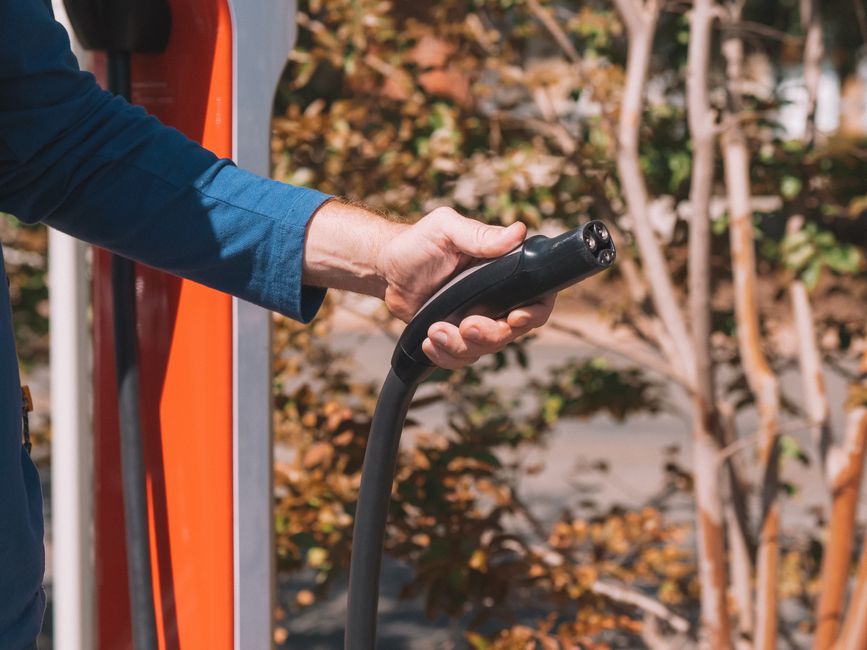
When the temperature drops, I don’t rely on the car’s built-in navigation to find a charger. I check Zap-Map. Why? Because the community data is real-time. I can see if a rapid charger at a motorway services has been reported as faulty by someone who was there ten minutes ago. Relying on outdated data is the primary cause of stress in winter driving.
Check the weather: If it’s below 5°C, subtract 20% from your maximum range immediately. Pre-condition: If your car allows it, warm the battery while it’s still plugged in at home. It uses the grid’s electricity, not your battery’s precious reserves. Use your seat heaters: Heating the air in a car is energy-intensive. Heating your backside is not.Risk vs. Reward: The charger gamble
Every road trip is a calculation of risk vs. reward. Is it worth pushing the battery to 10% to get to that one specific charger with a high-speed output, or should I stop at 30% for a slower one? In the summer, I’m a gambler. In the winter, I’m a coward. I stop earlier, and I stop more often.
The reward for stopping early is peace of mind. The risk of pushing it in the cold is finding yourself in a "limp home" mode, where the car limits your power to save the battery. Never, ever cut it that close in freezing rain. It isn't worth the adrenaline spike.
Community sanity checks via Disqus
Whenever I get frustrated by a drop in range, I head over to the forums and comment sections—often using Disqus—to see if other owners in similar regions are experiencing the same dip. It’s a great way to sanity-check your car’s health. If everyone is seeing a 20% drop and you’re seeing 50%, you know you’ve got a mechanical issue to address. If the numbers match up, you stop worrying and start driving.
There is too much fluff in the EV industry. Marketing departments love to throw around "best-in-class range" figures that assume a constant 65°F (18°C) temperature and a flat, frictionless road. I’m not interested in that. I’m interested in whether I can get from London to Manchester in February without spending two hours in a draughty service station car park.
Final thoughts: Range awareness over range anxiety
We need to stop using the term "range anxiety." It suggests a phobia. What we’re actually dealing with is "range awareness." Once you understand how your car reacts to the UK’s erratic winter climate, the anxiety disappears. You stop treating the battery percentage like a ticking bomb and start treating it like a fuel gauge that just happens to be https://dlf-ne.org/how-do-i-build-confidence-in-ev-range-without-babying-the-car/ a bit more sensitive to the weather.
So, the next time your range drops overnight, don’t blame the tech. It’s doing exactly what the laws of thermodynamics dictate. Your job is to adapt your planning to the weather, use the right tools, and keep your eyes on the mi/kWh, not just the miles remaining.

Have you noticed a significant drop in your efficiency this week? Jump into the comments section below and let’s compare notes. I want to know exactly how your model is holding up against the current cold snap.
Summary of Winter EV Habits
- Pre-condition while plugged in to preserve battery capacity. Use Zap-Map to filter out the broken chargers before you set off. Lower your speed: Drag increases exponentially with speed, and in the cold, efficiency is already compromised. Trust the mi/kWh figure: It’s the only honest piece of data on your dashboard.